
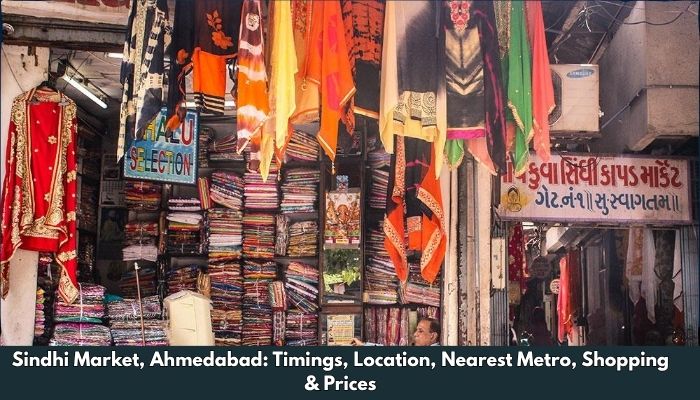

Sindhi Market is one of Ahmedabad’s oldest and most vibrant textile markets. It sits in the walled city, near Kalupur Gate in the Revdi Bazar area. This wholesale and retail bazaar was founded after Partition in 1947.
The market offers sarees, dress materials, bedsheets, handicrafts, and traditional footwear. Prices range from ₹100 for covers to ₹2,000+ for premium dress materials. Bargaining is expected here and helps you get the best deals.
Sindhi Market attracts families, brides-to-be, and budget shoppers. The market is open daily from 11:00 AM to 10:00 PM. It is easily reachable by the Kalupur Metro Station on the Blue Line. A visit offers a true Old Ahmedabad shopping experience.
Sindhi Market Quick Information
| Category | Details |
|---|---|
| Market Name | Sindhi Market (Revdi Bazar) |
| Location | Revdi Bazar, Kalupur, Old Ahmedabad |
| City | Ahmedabad |
| State | Gujarat |
| Country | India |
| Market Type | Wholesale & Retail, Textile Hub, Handicraft Bazaar |
| Famous For | Sarees, dress materials, bedsheets, handicrafts, traditional footwear |
| Opening Days | Monday to Sunday |
| Opening Time | 11:00 AM |
| Closing Time | 10:00 PM |
| Nearest Metro | Kalupur (Blue Line), 2 km |
| Best Time to Visit | October to March, 11:00 AM to 2:00 PM |
| Average Price Range | ₹100 to ₹2,000+ |
| Bargaining | Expected and common |
| Parking | Very limited; public transport recommended |
Why Visit Sindhi Market?
Sindhi Market is not just a market. It is a living testament to Ahmedabad’s resilience. The bazaar was founded after Partition in 1947 by Sindhi refugees who migrated from Pakistan. It remains a thriving commercial hub with over 600 shops.
The biggest advantage is the wholesale pricing. You can buy sarees, dress materials, and bedsheets at rates 30% to 40% below retail. Covers are available for ₹100 to ₹500, and dress materials range from ₹250 to ₹2,000.
Sindhi Market also offers a lively local experience. The narrow lanes are packed with shops and vendors. The bargaining culture makes every purchase feel like a win. It is not just shopping; it is a slice of Amdavadi life.
What Is Sindhi Market Famous For?
Sindhi Market is famous for its textiles and handicrafts. The market is a sprawling retail hub known for sarees, dress materials, bedsheets, and home upholstery. It is one of the most popular shopping markets in Ahmedabad.
The market is also known for its traditional handicrafts. Shops sell clothing with mirror embellishments, ethnic bandhani tie-dye sarees, and traditional home decor. Handcrafted bangles and glasswork are also popular.
Other popular categories include traditional footwear, bags, and cushion covers. The market is particularly busy during Navratri when shoppers flock here for chaniya cholis and festive wear. Jalaram and Shere Punjab Hotel are popular eateries in the area.
Things to Buy at Sindhi Market
| Category | What You Can Find | Typical Price Range |
|---|---|---|
| Sarees | Bandhani, silk, cotton, printed sarees | ₹250 to ₹2,000 |
| Dress Materials | Unstitched salwar fabrics, blouse pieces | ₹250 to ₹2,000 |
| Bedsheets & Covers | Cotton bedsheets, pillow covers, curtains | ₹100 to ₹500 |
| Handicrafts | Mirror-work clothing, wall hangings, decor items | ₹150 to ₹1,000 |
| Traditional Footwear | Mojaris, juttis, embroidered slippers | ₹200 to ₹800 |
| Home Upholstery | Cushion covers, furnishing fabrics | ₹100 to ₹800 |
| Bags & Accessories | Handbags, sling bags, totes | ₹150 to ₹700 |
| Bangles | Lac bangles, glass bangles, handcrafted bangles | ₹50 to ₹500 |
Prices vary by shop, quality, season, and bargaining. Always confirm the final price before paying.
Popular Products at Sindhi Market
- Bandhani Sarees – Traditional tie-and-dye sarees from ₹500.
- Dress Materials – Unstitched fabrics for custom tailoring from ₹250.
- Cotton Bedsheets – Printed and solid bedsheets from ₹100.
- Pillow Covers – Matching pillow covers from ₹100.
- Mirror-Work Clothing – Traditional Kutchi embroidery on fabrics.
- Mojaris – Traditional embroidered footwear from ₹200.
- Juttis – Embroidered footwear from local artisans.
- Handcrafted Bangles – Lac and glass bangles from ₹50 per set.
- Wall Hangings – Embroidered decor items from ₹150.
- Cushion Covers – Mirror-work and embroidered covers from ₹150.
- Sling Bags – Crossbody bags from ₹150 to ₹700.
- Curtains – Home furnishing fabrics from ₹200.
- Blouse Pieces – Matching blouse materials from ₹200.
- Chaniya Cholis – Navratri outfits from ₹1,000 to ₹3,500.
- Handicraft Items – Unique handmade decor pieces from ₹150.
Sindhi Market Price Guide
Prices in Sindhi Market are wholesale rates, much lower than retail shops. However, they vary widely by product type and quality. The table below gives approximate ranges.
| Product | Approximate Price |
|---|---|
| Cover (single piece) | ₹100 to ₹500 |
| Dress Material (per metre) | ₹250 to ₹2,000 |
| Saree (everyday) | ₹250 to ₹800 |
| Bedsheet (single) | ₹100 to ₹500 |
| Pillow Cover (pair) | ₹100 to ₹300 |
| Mojari (pair) | ₹200 to ₹800 |
| Lac Bangle (set) | ₹50 to ₹300 |
| Wall Hanging | ₹150 to ₹500 |
| Sling Bag | ₹150 to ₹700 |
| Chaniya Choli (basic) | ₹1,000 to ₹3,500 |
Prices may change based on season, quality, and shop location. Always ask for the final price before committing.
Is Bargaining Allowed at Sindhi Market?
Bargaining is expected at Sindhi Market. It is a traditional market, and prices are rarely fixed. Vendors quote higher rates for retail buyers. Negotiation is part of the shopping culture here. If you do not bargain, you are likely overpaying.
7 Bargaining Tips for Sindhi Market
- Start at 30% to 40% off the quoted price for most items.
- Compare prices at 3 to 4 shops before deciding.
- Buy multiple items – ordering 2 or 3 pieces gets a better rate.
- Stay polite – a friendly tone works better than aggression.
- Walk away if needed – sellers often call you back with a lower price.
- Visit on weekdays – sellers are more flexible when footfall is low.
- Carry cash – most vendors prefer notes and offer better rates.
Never disrespect sellers during negotiation. A fair deal benefits both sides.
Best Time to Visit Sindhi Market
The best season is October to March. The weather is cool and comfortable for walking. Summer months from April to June can be very hot. The monsoon season from July to September is less crowded but humid.
Best days are weekdays. The market is open every day. Weekday mornings are the calmest. Weekends are busier with local shoppers.
Best hours are 11:00 AM to 2:00 PM. Morning shopping avoids the afternoon rush. By evening, the market becomes vibrant. Peak hours are 5:00 PM to 10:00 PM. Avoid festival weeks like Navratri if you dislike crowds.
Sindhi Market Opening Hours
| Day | Opening Hours |
|---|---|
| Monday | 11:00 AM – 10:00 PM |
| Tuesday | 11:00 AM – 10:00 PM |
| Wednesday | 11:00 AM – 10:00 PM |
| Thursday | 11:00 AM – 10:00 PM |
| Friday | 11:00 AM – 10:00 PM |
| Saturday | 11:00 AM – 10:00 PM |
| Sunday | 11:00 AM – 10:00 PM |
The market is open on all 7 days. Shops generally open around 11:00 AM and trade until 10:00 PM. Some individual shops may have different timings.
How to Reach Sindhi Market
By Metro
The Kalupur Metro Station on the Blue Line is the closest metro stop. It is about 2 km from the market. The Ghee Kanta Metro Station is about 1.5 km away. Auto-rickshaws are available outside the stations for ₹20 to ₹50.
By Bus
Several AMTS buses stop near Sindhi Market. Major stops include Kalupur and Revdi Bazar. Buses from all parts of Ahmedabad ply to this area.
By Auto or Cab
Autos and cabs can drop you at the main market entrance. From Ahmedabad Junction, the journey takes 10 minutes. Traffic can be heavy during peak hours.
By Car
Driving is not recommended due to congestion. Parking is very limited. Getting dropped off nearby is the easiest option. Public transport is the best choice.
From Railway Station
Ahmedabad Junction (Kalupur) is about 2 km from Sindhi Market. A cab ride takes 5 to 10 minutes.
From Airport
Sardar Vallabhbhai Patel International Airport is about 10 km from the market. A cab ride takes 25 to 30 minutes depending on traffic.
Nearest Metro Station to Sindhi Market
| Information | Details |
|---|---|
| Nearest Metro Station | Kalupur (Blue Line) |
| Alternate Metro | Ghee Kanta (Blue Line) |
| Approximate Distance | 2 km (Kalupur) |
| Walking Time | 25 minutes |
| Auto Availability | Yes, outside the station |
The Kalupur Metro Station is the most convenient option. The Ghee Kanta Metro Station is about 1.5 km away. Both stations are on the Blue Line.
Parking Near Sindhi Market
Parking at Sindhi Market is a major challenge. The lanes are narrow and congested. There is no dedicated parking within the market area.
Getting dropped off by cab or auto is the easiest option. The metro remains the best option for reaching the market.
Shopping Tips for Sindhi Market
- Visit on weekday mornings for a calmer shopping experience.
- Bargain hard – start at 30% to 40% off the quoted price.
- Compare prices across multiple shops before deciding.
- Check product quality before buying, especially fabrics.
- Carry cash – most vendors prefer notes and offer better rates.
- Wear comfortable shoes – you will walk through narrow lanes.
- Bring a reusable bag – you will need it for your purchases.
- Avoid weekends if you dislike heavy crowds.
- Keep valuables secure in crowded lanes.
- Visit during Navratri for the best chaniya choli collection.
Safety Tips for Visiting Sindhi Market
Sindhi Market is generally safe for shoppers. However, the crowds require basic precautions. Pickpocketing has been reported in the area.
Keep your wallet and phone in a secure front pocket. Avoid carrying large amounts of cash. Bags should be worn across the body. Children should be held close in crowded lanes.
Traffic from autos and handcarts can be chaotic. Use UPI or cards at established shops. Check product quality before leaving the shop. Do not leave bags unattended.
Food and Street Food at Sindhi Market
Sindhi Market is also a street food destination. The lanes are lined with food stalls and small eateries. A shopping trip here is incomplete without trying the local snacks.
Jalaram is a popular eatery in the market area, known for its Gujarati thali. Shere Punjab Hotel serves North Indian cuisine. Local chaat stalls offer pani puri and sev puri.
Other must-try items include fafda-jalebi, khaman, and dabeli. A full meal for 2 people costs ₹300 to ₹500.
Places to Visit Near Sindhi Market
| Place | Approximate Distance | Why Visit |
|---|---|---|
| Manek Chowk | 0.5 km | Historic market square and night food market |
| Bhadra Fort | 0.7 km | Historic fort built in 1411 |
| Jama Masjid | 0.6 km | 15th-century mosque |
| Teen Darwaza | 0.5 km | Historic triple gateway |
| Sidi Saiyyed Mosque | 1 km | Famous for its stone lattice work |
| Sabarmati Riverfront | 2.5 km | Scenic riverfront promenade |
| Kankaria Lake | 5 km | Lake and amusement park |
Markets Near Sindhi Market
| Market | Known For |
|---|---|
| Manek Chowk | Gold, silver, street food, vegetables |
| Law Garden Market | Chaniya cholis, bandhani fabrics |
| Ratanpole | Traditional Gujarati wear |
| Relief Road | Budget shopping, accessories |
| Kalupur Cloth Market | Wholesale fabrics and textiles |
Shopping Experience at Sindhi Market
Walking into Sindhi Market feels like stepping into a living piece of history. The lanes are narrow and packed. Shopkeepers call out prices. Stacks of colourful sarees and bedsheets catch your eye.
The market is dense and layered. Shops and stalls line both sides of the road. The historic charm is visible in the old buildings and vintage signage. Each lane has its own speciality.
Sellers are experienced and friendly. Bargaining is part of the interaction. A smile and a fair offer go a long way. The energy is chaotic and vibrant.
The overall experience is rewarding for budget shoppers. You come for the textiles and handicrafts. You leave with beautiful fabrics and a taste of Old Ahmedabad.
Pros and Cons of Sindhi Market
| Pros | Cons |
|---|---|
| Ahmedabad’s oldest textile market | Very crowded, especially on weekends |
| Wholesale prices 30% to 40% below retail | Parking is a major challenge |
| Huge variety of sarees and dress materials | Lanes are narrow and congested |
| Good metro connectivity (Kalupur) | Hard to navigate for first-time visitors |
| Rich cultural and historical significance | Quality varies between shops |
| Open every day | Some vendors may overcharge tourists |
Who Should Visit Sindhi Market?
Sindhi Market suits families looking for textiles and household items. Brides-to-be will find sarees and dress materials at reasonable prices. Bargain hunters will enjoy the negotiation culture.
College students can buy budget fashion and accessories. Tourists can experience the authentic Old Ahmedabad market atmosphere. Gift shoppers will find handicrafts and home decor items.
The market is best suited for visitors who are comfortable with crowds. If you prefer organised shopping, this may not be for you.
History of Sindhi Market
Sindhi Market was founded after the Partition of India in 1947. A sizable chunk of the Sindhi population migrated to Ahmedabad from areas that are now in Pakistan. They settled in the Kalupur area and established this market.
The Sindhi refugees were allotted land for setting up the Sardar Patel Sindhi Cloth Market Cooperative Society. The market was developed for Sindhi traders, and 455 shops were given on rent. Over the years, it grew into a thriving commercial hub with over 600 shops.
Today, Sindhi Market remains a testament to the resilience and enterprise of the Sindhi community. It is one of Ahmedabad’s most significant shopping destinations.
Photography at Sindhi Market
Sindhi Market offers good street photography opportunities. The colourful shops, busy lanes, and vibrant displays make for vibrant images.
Market scenes with piles of sarees, bedsheets, and handicrafts are great for documentary photography. Food photography is popular at local eateries.
Evening atmosphere creates warm lighting. Always ask shopkeepers before taking close-up portraits.
FAQs
What is Sindhi Market famous for?
Sindhi Market is famous for its textiles and handicrafts. It is known for sarees, dress materials, bedsheets, and traditional home decor.
What are the opening hours of Sindhi Market?
The market opens at 11:00 AM and closes by 10:00 PM. It is open every day.
Which day is Sindhi Market closed?
The market is open every day. There is no weekly closure.
Which metro station is nearest to Sindhi Market?
The Kalupur Metro Station on the Blue Line is the nearest. It is about 2 km from the market.
Is bargaining allowed at Sindhi Market?
Bargaining is expected here. Start at 30% to 40% off and negotiate politely.
What can I buy at Sindhi Market?
You can buy sarees, dress materials, bedsheets, handicrafts, and traditional footwear. Home upholstery and bangles are also available.
Is parking available near Sindhi Market?
Parking is very limited. Getting dropped off by cab or auto is the easiest option.
Is Sindhi Market suitable for families?
Families can visit, but the crowds are heavy. Avoid weekend afternoons for a calmer experience.
What is the best time to visit Sindhi Market?
Visit on a weekday morning between 11:00 AM and 2:00 PM. This is when crowds are thinner.
How far is Sindhi Market from Manek Chowk?
Manek Chowk is about 0.5 km from Sindhi Market. It is a short walk away.
Conclusion
Sindhi Market is located in Revdi Bazar, Kalupur, Old Ahmedabad. This textile market is famous for sarees, dress materials, and handicrafts at the lowest prices.
The market offers bedsheets, traditional footwear, and home upholstery. Prices range from ₹100 to ₹2,000+. Bargaining is expected and helps you get the best deals.
The market is open every day from 11:00 AM to 10:00 PM. The Kalupur Metro Station on the Blue Line provides easy access. A visit offers a true Old Ahmedabad shopping experience.