


Dilli Haat is one of Delhi’s most unique cultural markets. It sits in South Delhi, opposite INA Market on Sri Aurobindo Marg. This open-air craft bazaar and food plaza showcases India’s diversity under one roof.
The market offers handicrafts, handlooms, ethnic wear, jewellery, and regional cuisine. Entry costs ₹30 for adults and ₹100 for foreigners. Stalls rotate every 15 days, so no two visits are the same.
Dilli Haat attracts tourists, craft lovers, families, and foodies. The market is open daily from 10:30 AM to 10:00 PM. It is easily reachable by the INA Metro Station. A visit offers a true mini India experience.
Dilli Haat Quick Information
| Category | Details |
|---|---|
| Market Name | Dilli Haat (INA) |
| Location | Sri Aurobindo Marg, opposite INA Market |
| City | New Delhi |
| State | Delhi (Union Territory) |
| Country | India |
| Market Type | Handicraft Market, Food Plaza, Cultural Bazaar |
| Famous For | Handicrafts, handlooms, regional food, cultural performances |
| Opening Days | Open daily (Monday to Sunday) |
| Opening Time | 10:30 AM |
| Closing Time | 10:00 PM |
| Nearest Metro | Dilli Haat – INA (Yellow & Pink Line) |
| Best Time to Visit | October to March, 11:00 AM to 5:00 PM |
| Average Price Range | ₹100 to ₹35,000+ |
| Bargaining | Limited; prices are mostly fixed |
| Parking | Available at the complex |
Why Visit Dilli Haat?
Dilli Haat is not just a market. It is a cultural experience that brings rural India to the heart of Delhi. The market was designed to resemble a traditional village haat. Thatched-roof cottages and open-air stalls create a rustic atmosphere.
The biggest advantage is the variety of crafts. You can buy rosewood carvings, camel hide footwear, brassware, silk fabrics, and tribal jewellery. Artisans from 29 states sell their products directly to buyers.
Dilli Haat also offers a pan-Indian food court. Stalls from Sikkim, Nagaland, Jammu, and Maharashtra serve authentic regional dishes. The cultural performances on the open stage add to the experience.
What Is Dilli Haat Famous For?
Dilli Haat is famous for its rotating handicraft stalls. Artisans from across India are allotted stalls for 15 days. This means the market changes every two weeks. You will always find something new here.
The market is also known for its regional food court. Each state has its own stall serving authentic cuisine. Sikkim’s momos, Nagaland’s smoked pork, and Jammu’s kebabs are visitor favourites.
Other popular categories include handloom fabrics, ethnic jewellery, and home decor. The market also hosts cultural events, craft exhibitions, and festivals throughout the year.
Things to Buy at Dilli Haat
| Category | What You Can Find | Typical Price Range |
|---|---|---|
| Handicrafts | Rosewood carvings, brassware, metal crafts | ₹200 to ₹35,000+ |
| Handloom Fabrics | Silk, wool, cotton, Banarasi sarees | ₹500 to ₹15,000 |
| Ethnic Wear | Kurtis, shawls, stoles, dupattas | ₹300 to ₹5,000 |
| Jewellery | Tribal jewellery, beads, oxidised earrings | ₹100 to ₹2,000 |
| Footwear | Camel hide juttis, embroidered slippers | ₹300 to ₹1,500 |
| Home Decor | Pottery, ceramics, wall art, lanterns | ₹150 to ₹5,000 |
| Paintings | Madhubani, Pattachitra, Thangka art | ₹500 to ₹20,000 |
| Organic Products | Herbal soaps, oils, spices, tea | ₹100 to ₹1,000 |
Prices vary by artisan, quality, and craft type. Always confirm the final price before paying.
Popular Products at Dilli Haat
- Rosewood Carvings – Intricate wooden sculptures and decorative pieces from South India.
- Camel Hide Footwear – Embellished juttis and slippers from Rajasthan.
- Banarasi Silk Sarees – Handwoven silk sarees with rich zari work.
- Madhubani Paintings – Traditional folk art from Bihar on canvas and paper.
- Brassware – Idols, lamps, and decorative items from Moradabad.
- Tribal Jewellery – Beaded necklaces and earrings from Northeast India.
- Pattachitra Art – Scroll paintings from Odisha depicting mythological themes.
- Thangka Paintings – Buddhist scroll art from Sikkim and Tibet.
- Organic Spices – Whole spices and herbal products from Kerala.
- Handloom Shawls – Woollen and Pashmina shawls from Kashmir.
- Pottery & Ceramics – Blue pottery from Jaipur and terracotta items.
- Cane & Jute Products – Bags, baskets, and home decor from Bengal.
- Herbal Soaps – Handmade soaps with natural ingredients.
- Wooden Toys – Traditional toys from Channapatna in Karnataka.
- Block-Printed Fabrics – Cotton and silk fabrics from Rajasthan.
Dilli Haat Price Guide
Prices at Dilli Haat are moderate to premium. The market operates on a fixed-price model for most stalls. However, some artisans may offer small discounts for bulk purchases. The table below gives approximate ranges.
| Product | Approximate Price |
|---|---|
| Rosewood carving (small) | ₹200 to ₹800 |
| Camel hide jutti (pair) | ₹300 to ₹800 |
| Banarasi silk saree | ₹2,000 to ₹15,000 |
| Madhubani painting (medium) | ₹500 to ₹3,000 |
| Brass diya (single) | ₹150 to ₹500 |
| Tribal necklace | ₹100 to ₹800 |
| Handloom shawl | ₹500 to ₹3,000 |
| Blue pottery vase | ₹300 to ₹1,500 |
| Herbal soap (pack of 3) | ₹150 to ₹400 |
| Sikkim momos (plate) | ₹80 to ₹120 |
| Nagaland smoked pork | ₹150 to ₹250 |
| Hyderabadi biryani | ₹150 to ₹250 |
Prices may change based on artisan, quality, and season. Always ask for the final price before committing.
Is Bargaining Allowed at Dilli Haat?
Bargaining is limited at Dilli Haat. Most stalls have fixed prices posted. The market is designed to offer fair rates to both artisans and buyers. Aggressive haggling is not encouraged here.
5 Bargaining Tips for Dilli Haat
- Ask politely if a discount is possible for bulk purchases.
- Buy multiple items from the same stall for a better rate.
- Visit on weekdays when stalls are less busy.
- Focus on smaller items where artisans may be flexible.
- Respect the artisan’s work – prices reflect genuine craftsmanship.
Never push for discounts where they are clearly not offered. Dilli Haat is largely a fixed-price market.
Best Time to Visit Dilli Haat
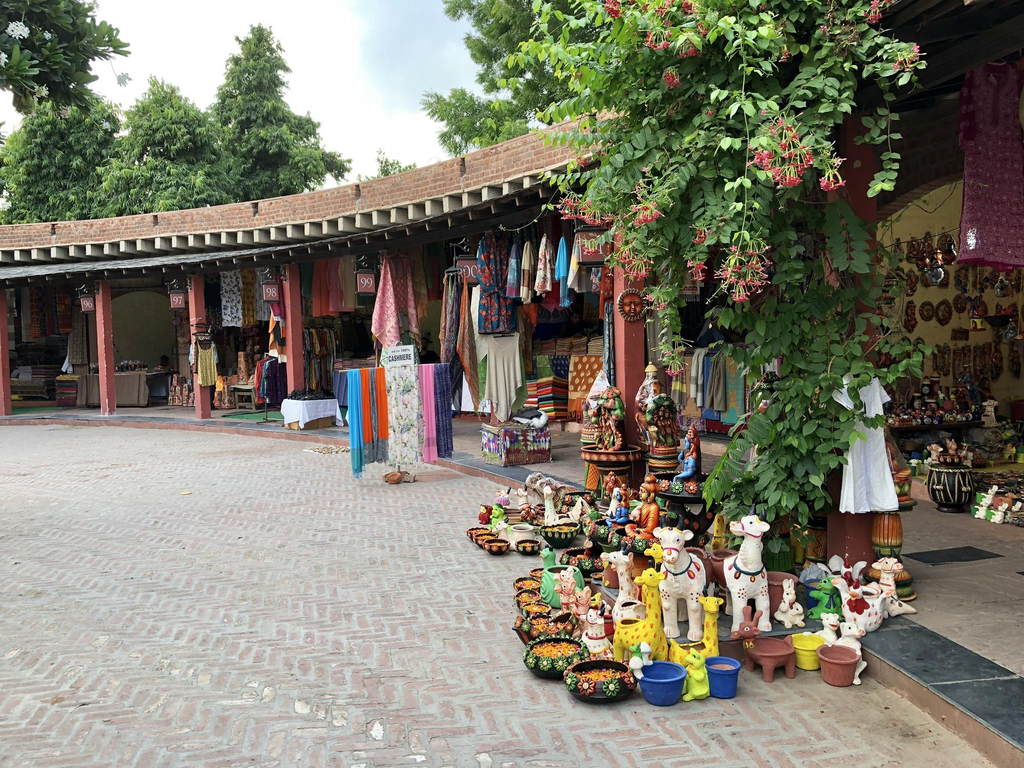
The best months are October to March. The weather is cool and comfortable for walking. Winter evenings are especially pleasant. Summer afternoons from April to June can be hot.
Best hours are 11:00 AM to 5:00 PM. Morning visits avoid the afternoon rush. Evenings are lively with cultural performances and food stalls. Weekends are busier than weekdays.
Festival seasons like Diwali, Holi, and Teej bring special stalls and events. Avoid visiting during peak summer afternoons if you dislike heat.
Dilli Haat Opening Hours
| Day | Opening Hours |
|---|---|
| Monday | 10:30 AM – 10:00 PM |
| Tuesday | 10:30 AM – 10:00 PM |
| Wednesday | 10:30 AM – 10:00 PM |
| Thursday | 10:30 AM – 10:00 PM |
| Friday | 10:30 AM – 10:00 PM |
| Saturday | 10:30 AM – 10:00 PM |
| Sunday | 10:30 AM – 10:00 PM |
The market is open on all 7 days. Entry tickets are available at the gate during these hours. Some food stalls may close earlier than 10:00 PM.
How to Reach Dilli Haat
By Metro
The Dilli Haat – INA Metro Station is on the Yellow and Pink Lines. Use Gate No. 5 for direct access. The market is about 100 metres from the station. The walk takes 2 to 3 minutes.
By Bus
Several DTC buses stop near Dilli Haat. Major stops include INA Market and AIIMS. Buses from Kashmere Gate ISBT and Nehru Place are frequent.
By Auto or Cab
Autos and cabs can drop you at the main entrance. The market is on Sri Aurobindo Marg, opposite INA Market. Traffic can be heavy during peak hours.
By Car
Driving is possible with parking available at the complex. The market is well-connected via Aurobindo Marg and Outer Ring Road. Paid parking is available near the entrance.
From Railway Station
Hazrat Nizamuddin Railway Station is about 7 km away. New Delhi Railway Station is approximately 10 km away. Both are short cab rides.
From Airport
Indira Gandhi International Airport is about 12 km from Dilli Haat. A cab ride takes 30 to 40 minutes depending on traffic.
Nearest Metro Station to Dilli Haat
| Information | Details |
|---|---|
| Nearest Metro Station | Dilli Haat – INA |
| Metro Line | Yellow & Pink Line |
| Approximate Distance | 100 metres |
| Walking Time | 2 to 3 minutes |
| Auto Availability | Yes, outside the station |
The AIIMS Metro Station on the Yellow Line is another nearby option. The South Extension Metro Station on the Pink Line is also accessible.
Parking Near Dilli Haat
Parking is available at the Dilli Haat complex. The parking area accommodates cars and two-wheelers. Rates are approximately ₹20 per hour for cars and ₹10 per hour for two-wheelers.
The parking facility is wheelchair accessible. The market is also wheelchair friendly with ramps and accessible bathrooms. Street parking is not advisable due to congestion.
Shopping Tips for Dilli Haat
- Visit on weekdays for a calmer shopping experience.
- Carry cash – some artisans may not accept cards.
- Wear comfortable shoes – you will walk a lot.
- Bring a reusable bag – you will need it for your purchases.
- Check product quality before buying.
- Ask about the artisan’s origin – it adds to the experience.
- Compare prices across stalls before deciding.
- Visit during festivals for special collections.
- Keep valuables secure in crowded areas.
- Confirm return policies before paying for expensive items.
Safety Tips for Visiting Dilli Haat
Dilli Haat is generally very safe for visitors. The market is well-maintained and has security staff. However, basic precautions are still advisable.
Keep your wallet and phone in a secure front pocket. Avoid leaving bags unattended at food stalls. Children should be supervised in the open areas. Traffic on Sri Aurobindo Marg can be heavy.
Use UPI or cards at established stalls. Check product quality before leaving. Do not leave shopping bags unattended.
Food and Street Food at Dilli Haat
Dilli Haat is a food lover’s paradise. The market has a massive outdoor food court with stalls from every Indian state. Each stall serves authentic regional cuisine at reasonable prices.
Sikkim’s momos are legendary and a must-try. Nagaland’s smoked pork and bamboo shoot curry offer unique flavours. Jammu’s kebabs and Kahwa tea are popular. Maharashtra’s vada pav and Rajasthan’s dal baati are also available.
Other must-try items include Hyderabadi biryani, Bengali fish fry, Assamese thukpa, and Manipuri fruit beer. A full meal for 2 people costs ₹400 to ₹800.
Places to Visit Near Dilli Haat
| Place | Approximate Distance | Why Visit |
|---|---|---|
| INA Market | 0.5 km | Gourmet food and imported goods |
| Safdarjung’s Tomb | 2 km | Mughal-era garden tomb |
| Lodhi Garden | 3 km | Historic gardens and tombs |
| India Gate | 4 km | Iconic war memorial |
| Hauz Khas Village | 5 km | Historic ruins and cafes |
| Sarojini Nagar Market | 2 km | Export-surplus fashion |
| National Rail Museum | 3 km | Vintage trains and railway history |
| Dilli Haat Pitampura | 15 km | Another Dilli Haat branch |
Markets Near Dilli Haat
| Market | Known For |
|---|---|
| INA Market | Imported food, spices, vegetables |
| Sarojini Nagar Market | Export-surplus fashion |
| Lajpat Nagar Market | Ethnic wear and bridal shopping |
| Khan Market | Premium boutiques and bookstores |
| Hauz Khas Village | Boutiques, cafes, and nightlife |
Shopping Experience at Dilli Haat
Walking into Dilli Haat feels like entering a village fair. The thatched-roof cottages and open-air stalls create a rustic atmosphere. The lanes are bustling but not chaotic.
The market is well-organised and wheelchair accessible. Each state has its own designated area. The food court is at the centre, surrounded by craft stalls. The open stage hosts cultural performances.
Sellers are artisans themselves. They are happy to explain their craft and its origin. Bargaining is limited, but fair prices are guaranteed. The experience is relaxed and cultural.
The overall experience is rewarding for craft lovers. You come for the handicrafts. You leave with unique treasures and a full stomach.
Pros and Cons of Dilli Haat
| Pros | Cons |
|---|---|
| Rotating stalls offer new products every 15 days | Prices are higher than street markets |
| Authentic regional food from across India | Bargaining is limited |
| Cultural performances and events | Can get crowded on weekends |
| Wheelchair accessible | Some stalls may feel repetitive |
| Good metro connectivity | Limited parking during peak hours |
| Safe and well-maintained | Market closes at 10:00 PM |
Who Should Visit Dilli Haat?
Dilli Haat suits tourists looking for authentic Indian crafts. Craft lovers will enjoy the rotating stalls and artisan interactions. Foodies will love the pan-Indian food court.
Families can enjoy a relaxed day with shopping and dining. Culture enthusiasts will appreciate the performances and exhibitions. Gift shoppers will find unique handmade items.
The market is best suited for visitors who value quality and authenticity. If you are looking for budget bargains, other Delhi markets may be better options.
Handicrafts at Dilli Haat
Dilli Haat is a handicraft paradise. The market showcases traditional crafts from 29 Indian states. Artisans sell their products directly to buyers, eliminating middlemen.
Rosewood and sandalwood carvings from Karnataka are popular. Camel hide footwear from Rajasthan is a visitor favourite. Brassware from Moradabad, blue pottery from Jaipur, and Pattachitra paintings from Odisha are also available.
Tribal jewellery from Northeast India, Banarasi silk from Varanasi, and Madhubani art from Bihar add to the variety. The rotating stalls ensure that the collection changes every 15 days.
History of Dilli Haat
Dilli Haat was established in March 1994. It was jointly set up by Delhi Tourism, NDMC, Ministry of Textiles, and Ministry of Tourism. The idea was to create a permanent village haat in the city.
The market was built on 6 acres of land that was reclaimed for the project. The goal was to provide direct marketing access to rural artisans. It also aimed to preserve traditional crafts.
In 2003, Dilli Haat became fully wheelchair accessible. Two more branches opened in Pitampura (2008) and Janakpuri (2014) . The INA branch remains the oldest and most popular.
Photography at Dilli Haat
Dilli Haat offers excellent cultural photography opportunities. The thatched-roof cottages, colourful stalls, and artisan workshops make for vibrant images.
Craft photography is popular at pottery and painting stalls. Food photography is popular at the regional food court. Cultural performances on the open stage provide dynamic shots.
Evening atmosphere creates warm lighting. Always ask artisans and performers before taking close-up photos.
FAQs
What is Dilli Haat famous for?
Dilli Haat is famous for its handicrafts and regional food. It is a cultural market showcasing India’s diversity in one place.
What are the opening hours of Dilli Haat?
Dilli Haat opens at 10:30 AM and closes at 10:00 PM. It is open on all 7 days.
What is the entry fee for Dilli Haat?
Entry costs ₹30 for Indian adults, ₹20 for children, and ₹100 for foreigners.
Which metro station is nearest to Dilli Haat?
The Dilli Haat – INA Metro Station on the Yellow and Pink Lines is the nearest. It is about 100 metres from the market.
Is bargaining allowed at Dilli Haat?
Bargaining is limited here. Most stalls have fixed prices. Some artisans may offer small discounts for bulk purchases.
What can I buy at Dilli Haat?
You can buy handicrafts, handloom fabrics, ethnic wear, jewellery, and home decor. Regional food and organic products are also available.
Is parking available at Dilli Haat?
Yes, parking is available at the complex. Rates are approximately ₹20 per hour for cars.
Is Dilli Haat suitable for families?
Yes, Dilli Haat is family-friendly. It is safe, well-maintained, and has a children’s play area.
What is the best time to visit Dilli Haat?
Visit between October and March for the best weather. Weekday mornings are the calmest.
How far is Dilli Haat from INA Market?
INA Market is about 0.5 km from Dilli Haat. It is a short walk away.
Conclusion
Dilli Haat is located in South Delhi, opposite INA Market on Sri Aurobindo Marg. This open-air craft bazaar is famous for handicrafts and regional cuisine from across India.
The market offers rosewood carvings, handloom fabrics, ethnic jewellery, and authentic food. Prices range from ₹100 to ₹35,000+. Bargaining is limited, but fair prices are guaranteed.
The market opens at 10:30 AM and closes at 10:00 PM. It is open daily. The INA Metro Station on the Yellow and Pink Lines provides easy access. A visit offers a true mini India experience.