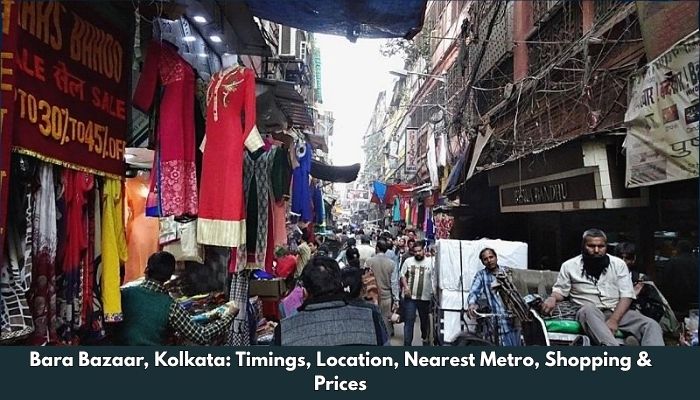

Bara Bazaar is one of India’s largest wholesale markets. It sits in Central-North Kolkata, in the Jorasanko and Posta neighbourhoods. This wholesale and retail bazaar is famously called the “Chandni Chowk of Kolkata”.
The market offers handloom sarees, spices, dry fruits, electronics, brassware, and festive decorations. Prices range from ₹250 for everyday cotton sarees to ₹50,000+ for premium handloom silks. Bargaining is expected and essential here.
Bara Bazaar attracts retailers, bulk buyers, families, and tourists. The market is closed on Sundays. It is easily reachable by the Mahatma Gandhi Road Metro Station. A visit offers a true Old Kolkata shopping experience.
Bara Bazaar Quick Information
| Category | Details |
|---|---|
| Market Name | Bara Bazaar (Burrabazar) |
| Location | Jorasanko and Posta, Central-North Kolkata |
| City | Kolkata |
| State | West Bengal |
| Country | India |
| Market Type | Wholesale Market, Textile Hub, Mixed Bazaar |
| Famous For | Handloom sarees, spices, dry fruits, electronics, brassware, festive items |
| Opening Days | Monday to Saturday |
| Opening Time | 10:00 AM |
| Closing Time | 7:30 PM |
| Nearest Metro | Mahatma Gandhi Road (Blue Line) |
| Best Time to Visit | Tuesday to Thursday, 10:00 AM to 12:00 PM |
| Average Price Range | ₹250 to ₹50,000+ |
| Bargaining | Expected and essential |
| Parking | Very limited; public transport recommended |
Why Visit Bara Bazaar?
Bara Bazaar is not just a market. It is the commercial heartbeat of Kolkata. The bazaar has been trading for over 200 years. It remains the first stop for shopkeepers restocking from across Eastern India.
The biggest advantage is the wholesale pricing. You can buy handloom sarees, spices, and household goods at rates 50% to 70% below retail. Tant, Jamdani, and Baluchari sarees are the market’s pride.
Bara Bazaar also offers a raw glimpse into Kolkata’s trade heritage. The narrow lanes are packed with shops and handcarts. The bargaining culture makes every purchase feel like a victory. It is not just shopping; it is a sensory experience.
What Is Bara Bazaar Famous For?
Bara Bazaar is famous for its handloom sarees and textiles. The market is the wholesale hub for Tant, Jamdani, Baluchari, and synthetic sarees. Cotton Street and Jamunalal Bajaj Street are the main saree arteries.
The market is also known for its spice and dry fruit trade. The Raja Katra area is the spice hub, selling whole and ground spices, dry fruits, and grocery staples. Posta, on the western edge, handles grocery and dry fruit wholesalers.
Other popular categories include electronics, brassware, and festive decorations. The market is divided into specialised lanes called pattis. Dhotipatti deals in cotton dhotis, Tulapatti in yarn and jute, and Fancypatti in festive cloth.
Things to Buy at Bara Bazaar
| Category | What You Can Find | Typical Price Range |
|---|---|---|
| Handloom Sarees | Tant, Jamdani, Baluchari, cotton sarees | ₹250 to ₹50,000+ |
| Ready-Made Garments | Kurtis, shirts, jeans, children’s wear | ₹150 to ₹2,000 |
| Spices & Dry Fruits | Whole spices, ground spices, almonds, cashews | ₹200 to ₹2,000 per kg |
| Electronics | Mobile phones, accessories, cables, repairs | ₹100 to ₹50,000+ |
| Brass & Steel Utensils | Kitchenware, tools, fittings, decorative items | ₹100 to ₹5,000 |
| Stationery & Gifts | Pens, notebooks, party supplies, puja items | ₹20 to ₹500 |
| Festive Decorations | Diwali lights, Durga Puja items, lanterns | ₹50 to ₹1,000 |
| Groceries | Cereals, food grains, edible oils, sugar, salt | ₹50 to ₹500 |
Prices vary by shop, quality, season, and quantity. Always confirm the final price before paying.
Popular Products at Bara Bazaar
- Tant Sarees – Traditional Bengali handloom sarees from ₹250 onwards.
- Jamdani Sarees – Fine muslin sarees with intricate woven designs.
- Baluchari Sarees – Silk sarees with mythological scenes woven into the pallu.
- Whole Spices – Cardamom, cinnamon, cloves, and black pepper in bulk.
- Dry Fruits – Almonds, cashews, pistachios, and walnuts at wholesale rates.
- Brass Utensils – Traditional kitchenware and decorative items.
- Steel Kitchenware – Plates, bowls, cookware, and storage containers.
- Mobile Accessories – Chargers, covers, earphones at wholesale prices.
- Festive Lanterns – Chinese lanterns and Diwali decorations.
- Puja Items – Idols, incense, lamps, and religious ornaments.
- Kurtis – Everyday ethnic wear from ₹150 to ₹500.
- Children’s Wear – Affordable clothing for kids in bulk lots.
- Jhalmuri – Spicy puffed rice snack available at street stalls.
- Dahi Kachori – Deep-fried kachoris served with yoghurt and chutney.
- Kulfi – Traditional Indian ice cream in multiple flavours.
Bara Bazaar Price Guide
Prices in Bara Bazaar are wholesale rates, much lower than retail shops. However, they vary widely by product type and quantity. The table below gives approximate ranges.
| Product | Approximate Price |
|---|---|
| Cotton Saree (everyday) | ₹250 to ₹800 |
| Tant Saree | ₹500 to ₹3,000 |
| Jamdani Saree | ₹1,500 to ₹15,000 |
| Baluchari Saree | ₹5,000 to ₹50,000+ |
| Kurti (single piece) | ₹150 to ₹500 |
| Shirt (single piece) | ₹300 to ₹500 |
| Almonds (1 kg) | ₹600 to ₹1,200 |
| Cardamom (100g) | ₹200 to ₹500 |
| Mobile Cover | ₹50 to ₹200 |
| Brass Diya (single) | ₹100 to ₹500 |
| Jhalmuri (plate) | ₹20 to ₹50 |
| Kulfi (piece) | ₹30 to ₹80 |
Prices may change based on season, quality, and quantity. Always ask for the final price before committing.
Is Bargaining Allowed at Bara Bazaar?
Bargaining is essential at Bara Bazaar. It is a wholesale market, and prices are rarely fixed. Vendors quote higher rates for retail buyers. Negotiation is part of the shopping culture here. If you do not bargain, you are likely overpaying.
7 Bargaining Tips for Bara Bazaar
- Start at 50% of the quoted price for retail purchases.
- Buy in bulk – ordering 12 or more pieces gets wholesale rates.
- Compare prices at 3 to 4 shops before deciding.
- Stay polite – a friendly tone works better than aggression.
- Walk away if needed – sellers often call you back with a lower price.
- Visit on weekdays – sellers are more flexible when footfall is low.
- Carry cash – most wholesalers prefer notes and offer better rates.
Never disrespect sellers during negotiation. A fair deal benefits both sides.
Best Time to Visit Bara Bazaar
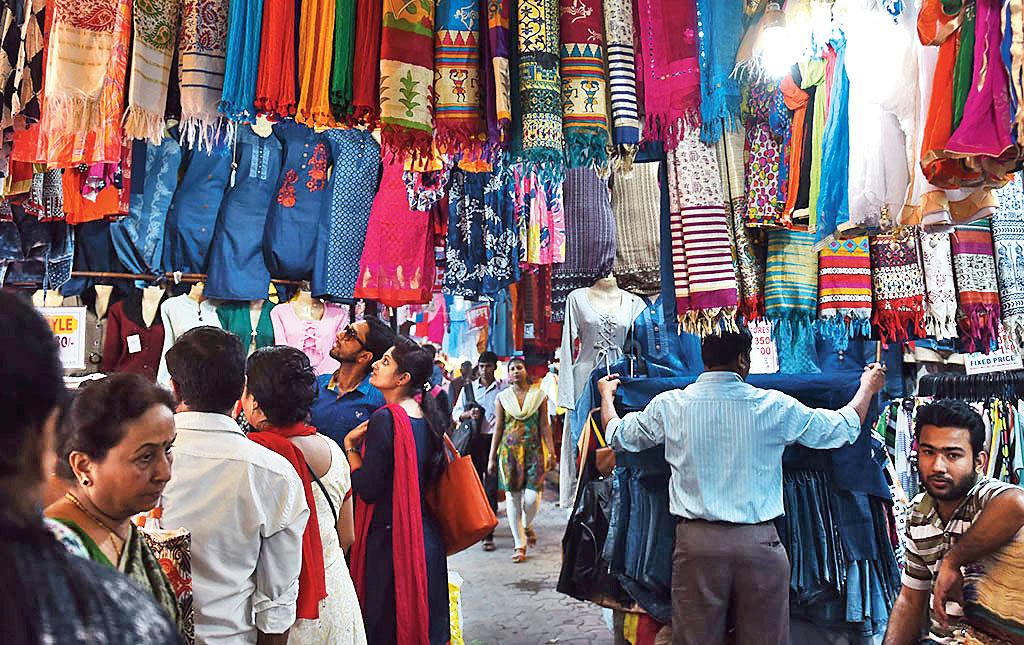
The best days are Tuesday to Thursday. The market is closed on Sundays. Tuesday to Thursday between 10:00 AM and noon is the calmest time. This is before the lanes fill up with delivery handcarts and afternoon crowds.
Best hours are 10:00 AM to 12:00 PM. Morning shopping avoids the afternoon rush. By 3:00 PM, the lanes become very crowded. Evenings are busy with retail customers.
Winter months from October to March are ideal for shopping. The weather is comfortable for walking. Summer afternoons can be exhausting. Avoid festival weeks like Durga Puja and Diwali if you dislike crowds.
Bara Bazaar Opening Hours
| Day | Opening Hours |
|---|---|
| Monday | 10:00 AM – 7:30 PM |
| Tuesday | 10:00 AM – 7:30 PM |
| Wednesday | 10:00 AM – 7:30 PM |
| Thursday | 10:00 AM – 7:30 PM |
| Friday | 10:00 AM – 7:30 PM |
| Saturday | 10:00 AM – 7:30 PM |
| Sunday | Closed |
Most shops open around 10:00 AM and trade until 7:00 to 8:00 PM. Sunday is the market’s weekly off day. Exact timings may differ between individual shops.
How to Reach Bara Bazaar
By Metro
The Mahatma Gandhi Road Metro Station on the Blue Line is the closest stop. It is about 10 to 15 minutes walking distance from the market. Use Gate No. 1 for direct access. The metro is the best option during peak hours.
By Local Train
The Howrah Railway Station is about 0.48 km from the market. It is a 6-minute walk. The Sealdah Railway Station is about 3.3 km away. Chitpur and Bara Bazar are also connected by the Kolkata Circular Railway.
By Bus
Several bus routes pass through or near Bara Bazaar. Major routes include Howrah Station to Bara Bazar, Esplanade to Bara Bazar, and Shyambazar to Bara Bazar. Buses from all parts of Kolkata ply to this area.
By Auto or Cab
Autos and cabs can drop you at the main market entrance. From Howrah Station, the journey takes 10 to 15 minutes. Traffic can be heavy during peak hours. The lanes are narrow and congested, so walking is often faster.
By Car
Driving is not recommended due to congestion. Parking is very limited. Paid parking lots are available around the market, but you may have to walk a fair distance. Public transport is the best choice.
From Airport
Netaji Subhash Chandra Bose International Airport is about 15 km from Bara Bazaar. A cab ride takes 40 to 50 minutes depending on traffic.
Nearest Metro Station to Bara Bazaar
| Information | Details |
|---|---|
| Nearest Metro Station | Mahatma Gandhi Road (Blue Line) |
| Alternate Metro | Howrah (Green Line) |
| Approximate Distance | 10 to 15 minutes walk |
| Walking Time | 10 to 15 minutes |
| Auto Availability | Yes, outside the station |
The Mahatma Gandhi Road Metro Station is the most convenient option. The Howrah Metro Station on the Green Line is about 0.48 km away. Both stations provide easy access to the market.
Parking Near Bara Bazaar
Parking at Bara Bazaar is a major challenge. The lanes are narrow and congested. Paid parking lots are available around the market, but you may have to walk a fair distance.
It is better to use public transport or ride-sharing to reach the market. The metro and local trains remain the best options for reaching Bara Bazaar.
Shopping Tips for Bara Bazaar
- Visit on weekday mornings for fewer crowds and better deals.
- Bargain hard – start at 50% of the quoted price.
- Buy in bulk to get wholesale rates.
- Carry cash in small notes – most wholesalers prefer notes.
- Wear comfortable shoes – you will walk a lot.
- Bring a reusable bag – you will need it for your purchases.
- Check product quality before buying, especially electronics.
- Avoid weekends if you dislike heavy crowds.
- Keep valuables secure in crowded lanes.
- Ask about minimum quantities for wholesale pricing.
Safety Tips for Visiting Bara Bazaar
Bara Bazaar is generally safe for shoppers. However, the crowds require basic precautions. Phone snatching and pickpocketing have been reported in the area.
Keep your wallet and phone in a secure front pocket. Avoid carrying large amounts of cash. Bags should be worn across the body. Children should be held close in crowded lanes.
Traffic from autos and handcarts can be chaotic. Use UPI or cards at established shops. Check product quality before leaving the shop. Do not leave bags unattended.
Food and Street Food at Bara Bazaar
Bara Bazaar is also a street food destination. The lanes are lined with food stalls and small eateries. A shopping trip here is incomplete without trying the local snacks.
Bali Muree is a popular spot for samosa muree and samosa chaat. Tewari Sweets is known for its jalebi, aloo tikki, samosa, and kulfi faluda. Kanhaiya Kachori is famous for its club kachori served with aloo sabzi and jalebi.
Other must-try items include jhalmuri, dahi kachori, chilla, and kulfi. A full meal for 2 people costs ₹200 to ₹400.
Places to Visit Near Bara Bazaar
| Place | Approximate Distance | Why Visit |
|---|---|---|
| Howrah Bridge | 1 km | Iconic cantilever bridge |
| Nakhoda Masjid | 0.5 km | Historic mosque and landmark |
| Armenian Church | 1 km | 1707 church, oldest in Kolkata |
| Marble Palace | 1.5 km | 19th-century mansion with art collection |
| College Street | 2 km | Asia’s largest book market |
| Kumartuli | 2 km | Traditional potters’ quarter |
| Indian Museum | 3 km | India’s oldest and largest museum |
| Victoria Memorial | 4 km | Iconic white marble monument |
Markets Near Bara Bazaar
| Market | Known For |
|---|---|
| New Market | Sarees, leather goods, specialty food |
| Gariahat Market | Handloom sarees, fish, vegetables |
| Hatibagan Market | Budget fashion, accessories |
| College Street Market | Books, stationery, academic texts |
| Metiabruz Market | Factory-gate readymade garments |
Shopping Experience at Bara Bazaar
Walking into Bara Bazaar feels like entering a wholesale festival. The lanes are narrow and packed. Shopkeepers call out prices. Hand-rickshaw pullers manoeuvre through congested alleys. The air smells of frying jalebis and spices.
The market is dense and layered. Cotton Street is the saree hub. Raja Katra handles spices and dry goods. Posta is for grocery and dry fruit wholesalers. Each lane has its own personality.
Sellers are experienced and knowledgeable. Bargaining is part of the interaction. A smile and a fair offer go a long way. The energy is chaotic and vibrant.
The overall experience is rewarding for bulk buyers. You come for the wholesale prices. You leave with bags full of goods at unbeatable rates.
Pros and Cons of Bara Bazaar
| Pros | Cons |
|---|---|
| Extremely low wholesale prices | Very crowded, especially on weekends |
| Huge variety of goods | Parking is very limited |
| Excellent for bulk buying | Lanes are narrow and congested |
| Good metro and train connectivity | Quality can be inconsistent |
| Great street food options | Hard to navigate for first-time visitors |
| Rich cultural and historical significance | Market closed on Sundays |
Who Should Visit Bara Bazaar?
Bara Bazaar suits retailers and bulk buyers looking for wholesale rates. Families can buy clothing, spices, and household goods at low prices. Saree lovers will find Tant, Jamdani, and Baluchari sarees at reasonable rates.
College students can buy budget fashion and accessories. Tourists can experience the authentic Old Kolkata market atmosphere. Bargain hunters will enjoy the negotiation culture.
The market is best suited for visitors who are comfortable with crowds. If you prefer organised shopping, this may not be for you.
Wholesale Shopping at Bara Bazaar
Bara Bazaar is Kolkata’s largest wholesale market. It is the first stop for shopkeepers restocking from across Eastern India. The market supplies textiles, spices, groceries, and electronics to retailers.
Bulk buying is the key to getting the best rates. Most shops sell in dozens or bundles. Minimum quantities vary by shop and product. Wholesale pricing applies when you buy in larger quantities.
Retailers can buy sarees, kurtis, spices, and household goods at 50% to 70% below retail. The market also supplies brassware, steel utensils, and festive decorations.
History of Bara Bazaar
Bara Bazaar has been Kolkata’s principal trading hub for over 200 years. The name simply means “big market” in Bengali. It was originally called Sutanuti Haat and was owned by local Bengali merchants.
Marwari and Gujarati trading families settled here from the 18th century onward. They organised the market into specialised lanes called pattis. This structure survives largely unchanged today.
The market grew as a textile and yarn hub during the British era. It later expanded into spices, groceries, and electronics. Today, it remains the beating heart of Kolkata’s commercial trade.
Photography at Bara Bazaar
Bara Bazaar offers excellent street photography opportunities. The narrow lanes, colourful shop displays, and busy handcarts make for vibrant images.
Market scenes with stacks of spices, rolls of fabric, and brassware are great for documentary photography. Food photography is popular at jalebi stalls and kachori shops.
Evening atmosphere creates dramatic lighting. Always ask shopkeepers before taking close-up portraits.
FAQs
What is Bara Bazaar famous for?
Bara Bazaar is famous for its wholesale textiles, spices, and household goods. It is Kolkata’s oldest and largest wholesale market.
What are the opening hours of Bara Bazaar?
The market opens at 10:00 AM and closes by 7:30 PM. It operates from Monday to Saturday.
Which day is Bara Bazaar closed?
The market is closed on Sunday. The main wholesale shops remain shut.
Which metro station is nearest to Bara Bazaar?
The Mahatma Gandhi Road Metro Station on the Blue Line is the nearest. It is about 10 to 15 minutes walking distance.
Is bargaining allowed at Bara Bazaar?
Bargaining is essential here. Start at 50% of the quoted price and negotiate politely.
What can I buy at Bara Bazaar?
You can buy handloom sarees, spices, dry fruits, electronics, and brassware. Festive decorations and groceries are also available.
Is parking available near Bara Bazaar?
Parking is very limited. Paid parking lots are available, but you may have to walk a fair distance. The metro is the best option.
Is Bara Bazaar suitable for families?
Families can visit, but the crowds are heavy. Avoid weekend afternoons for a calmer experience.
What is the best time to visit Bara Bazaar?
Visit on a weekday morning between 10:00 AM and 12:00 PM. This is when crowds are thinner.
How far is Bara Bazaar from Howrah Bridge?
Howrah Bridge is about 1 km from Bara Bazaar. It is a short auto ride away.
Conclusion
Bara Bazaar is located in Central-North Kolkata, in the Jorasanko and Posta neighbourhoods. This wholesale market is famous for handloom sarees and spices at the lowest prices.
The market offers Tant sarees, Jamdani silks, dry fruits, and electronics. Prices range from ₹250 to ₹50,000+. Bargaining is expected and helps you get the best wholesale deals.
The market opens at 10:00 AM and closes at 7:30 PM. It is closed on Sunday. The Mahatma Gandhi Road Metro Station on the Blue Line provides easy access. A visit offers a true Old Kolkata wholesale shopping experience.