

Bapu Bazaar is one of Jaipur’s most vibrant and budget-friendly shopping streets. It runs through the walled Pink City, stretching between Sanganeri Gate and New Gate. This textile and handicraft bazaar is famous for mojari footwear and Rajasthani fabrics.
The market offers leheriya dupattas, bandhani sarees, juttis, lac bangles, and Jaipuri quilts. Prices range from ₹150 for small accessories to ₹5,000+ for premium textiles. Bargaining is essential here and can bring prices down by 40% to 50%.
Bapu Bazaar attracts locals, tourists, brides-to-be, and budget shoppers. The market is closed on Tuesdays. It is easily reachable by the Chandpole Metro Station. A visit offers a true Pink City shopping experience.
Bapu Bazaar Quick Information
| Category | Details |
|---|---|
| Market Name | Bapu Bazaar |
| Location | Chaura Raasta, between Sanganeri Gate and New Gate |
| City | Jaipur |
| State | Rajasthan |
| Country | India |
| Market Type | Street Market, Textile Hub, Budget Shopping Bazaar |
| Famous For | Mojaris, leheriya fabrics, bandhani sarees, lac bangles, Jaipuri quilts |
| Opening Days | Monday, Wednesday to Sunday (Closed Tuesdays) |
| Opening Time | 10:30 AM |
| Closing Time | 8:00 PM (some shops until 9:00 PM) |
| Nearest Metro | Chandpole (Pink Line), 0.5 km |
| Best Time to Visit | October to March, 5:00 PM to 8:00 PM |
| Average Price Range | ₹150 to ₹5,000 |
| Bargaining | Essential; start at 40% to 50% of quoted price |
| Parking | Limited; Ram Niwas Bagh underground parking available |
Why Visit Bapu Bazaar?
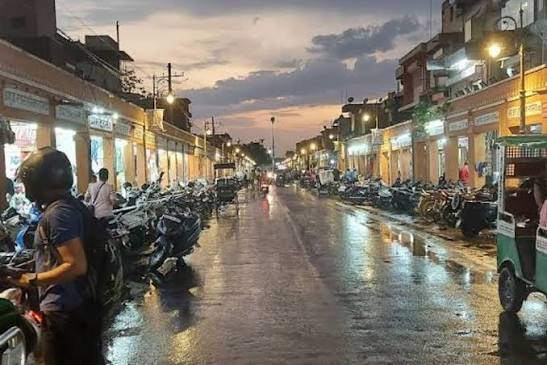
Bapu Bazaar is not just a market. It is the retail heartbeat of Jaipur’s old city. The market was laid out when Maharaja Sawai Jai Singh II founded Jaipur in 1727. It was later named after Mahatma Gandhi, whose nickname was Bapu.
The biggest advantage is the local pricing. Unlike tourist-heavy markets, Bapu Bazaar caters primarily to locals. This ensures authentic products and competitive prices. You can buy mojaris for ₹200 to ₹2,000 and leheriya dupattas from ₹200.
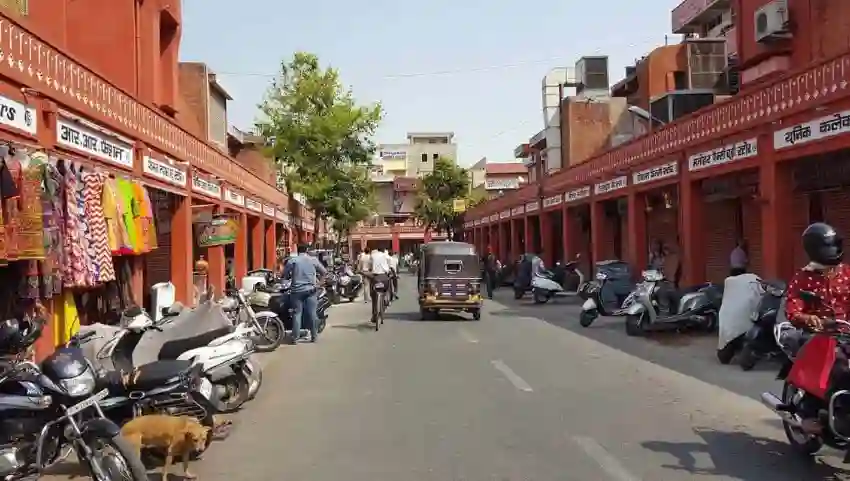
Bapu Bazaar also offers a vibrant street shopping experience. The pink-hued shops and colourful stalls create a lively atmosphere. The street food at the New Gate end adds to the charm. It is not just shopping; it is a slice of Jaipur’s daily life.
What Is Bapu Bazaar Famous For?
Bapu Bazaar is famous for its mojari footwear. These traditional Rajasthani shoes are made from camel leather and decorated with intricate embroidery. The market is the best place in Jaipur to buy genuine, affordable mojaris.
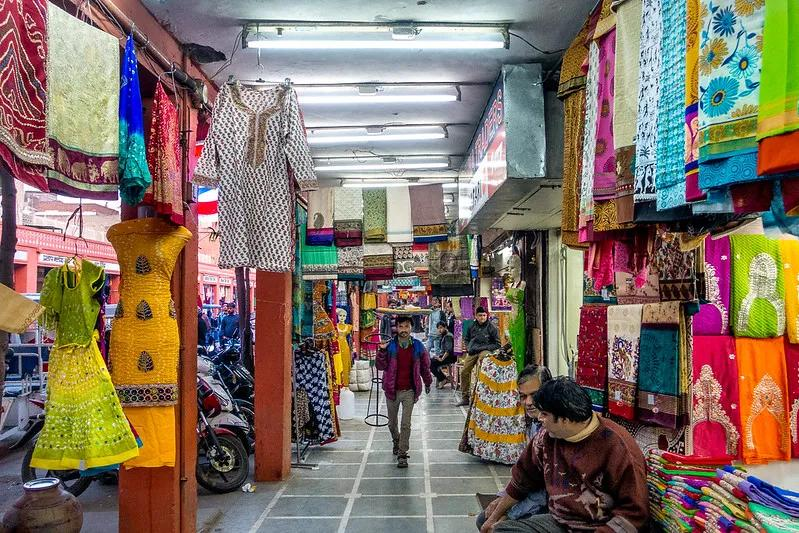
The market is also known for its Rajasthani textiles. Leheriya dupattas, bandhani sarees, Sanganeri print fabrics, and block-printed bed sheets are available in huge variety. Bandhej sarees and tie-dye materials are particularly popular.
Other popular categories include lac bangles, artificial jewellery, Jaipuri quilts, and handicrafts. The market also sells brass works, marble items, and sandstone products. The New Gate end is known for its street food stalls.
Things to Buy at Bapu Bazaar
| Category | What You Can Find | Typical Price Range |
|---|---|---|
| Mojaris & Juttis | Embroidered leather footwear, camel skin shoes | ₹200 to ₹2,000 |
| Textiles & Fabrics | Leheriya dupattas, bandhani sarees, block-printed fabrics | ₹150 to ₹3,000 |
| Jaipuri Quilts | Lightweight cotton quilts (razaai) | ₹800 to ₹3,000 |
| Lac Bangles | Traditional Rajasthani bangles | ₹50 to ₹800 per set |
| Artificial Jewellery | Earrings, necklaces, anklets, bangles | ₹100 to ₹1,000 |
| Handicrafts | Wooden souvenirs, puppets, brass items, marble decor | ₹200 to ₹2,000 |
| Ittar & Perfumes | Natural rose, jasmine, and sandalwood fragrances | ₹100 to ₹1,500 |
| Bandhej Sarees | Tie-and-dye sarees in vibrant colours | ₹500 to ₹5,000+ |
Prices vary by shop, quality, season, and bargaining. Always confirm the final price before paying.
Popular Products at Bapu Bazaar
- Mojari Footwear – Traditional camel leather shoes with vibrant embroidery.
- Leheriya Dupattas – Diagonal stripe tie-dye dupattas in bright colours.
- Bandhani Sarees – Traditional tie-and-dye sarees from Rajasthan.
- Jaipuri Razai – Lightweight cotton quilts with block-printed covers.
- Lac Bangles – Colourful lac bangles, a Rajasthani speciality.
- Sanganeri Print Fabric – Hand block-printed cotton fabrics.
- Juttis – Embroidered Punjabi-style footwear from ₹300.
- Bandhej Dress Material – Unstitched fabrics for custom tailoring.
- Brass Handicrafts – Decorative items and souvenirs.
- Wooden Puppets – Traditional Rajasthani string puppets.
- Ittar – Natural oil-based perfumes in small bottles.
- Marble Decor – Small marble items and inlay work.
- Cotton Kurtis – Everyday ethnic wear from ₹250.
- Bedsheets – Block-printed cotton bedsheets from ₹300.
- Bracelets – Metal and thread bracelets from ₹50.
Bapu Bazaar Price Guide
Prices in Bapu Bazaar are moderate and budget-friendly. The market caters to locals, so prices are generally fair. Bargaining can reduce them further. The table below gives approximate ranges.
| Product | Approximate Price |
|---|---|
| Mojari (pair) | ₹200 to ₹800 |
| Embroidered Jutti (pair) | ₹300 to ₹1,200 |
| Leheriya Dupatta | ₹200 to ₹800 |
| Bandhani Saree | ₹500 to ₹3,000 |
| Jaipuri Razai (single) | ₹800 to ₹2,000 |
| Lac Bangle (set of 12) | ₹100 to ₹500 |
| Artificial Earrings | ₹100 to ₹300 |
| Cotton Kurti | ₹250 to ₹800 |
| Block-Printed Bedsheet | ₹300 to ₹800 |
| Ittar (10ml) | ₹100 to ₹500 |
Prices may change based on season, quality, and shop location. Always ask for the final price before committing.
Is Bargaining Allowed at Bapu Bazaar?
Bargaining is essential at Bapu Bazaar. It is a street market, and prices are rarely fixed. Vendors quote higher rates expecting negotiation. If you do not bargain, you are likely overpaying. Start at 40% to 50% of the quoted price and work from there.
7 Bargaining Tips for Bapu Bazaar
- Start at 40% to 50% of the quoted price for most items.
- Compare prices at 3 to 4 shops before deciding.
- Buy multiple items – ordering 2 or 3 pieces gets a better rate.
- Stay polite – a friendly tone works better than aggression.
- Walk away if needed – sellers often call you back with a lower price.
- Visit on weekdays – sellers are more flexible when footfall is low.
- Carry cash – most vendors prefer notes and offer better rates.
Never disrespect sellers during negotiation. A fair deal benefits both sides.
Best Time to Visit Bapu Bazaar
The best season is October to March. The weather is cool and comfortable for walking. Summer months from April to June can be very hot. The monsoon season from July to September is less crowded but humid.
Best days are Monday, Wednesday, Thursday, Friday, and Saturday. The market is closed on Tuesdays. Sundays are busier with local shoppers.
Best hours are 5:00 PM to 8:00 PM. By then all shops are fully open, the heat drops, and the market lights up. Morning hours from 10:30 AM to 1:00 PM are also good for a calmer experience. Avoid 12:00 PM to 3:00 PM during summer months.
Bapu Bazaar Opening Hours
| Day | Opening Hours |
|---|---|
| Monday | 10:30 AM – 8:00 PM |
| Tuesday | Closed |
| Wednesday | 10:30 AM – 8:00 PM |
| Thursday | 10:30 AM – 8:00 PM |
| Friday | 10:30 AM – 8:00 PM |
| Saturday | 10:30 AM – 8:00 PM |
| Sunday | 10:30 AM – 8:00 PM |
Most shops begin opening between 10:30 AM and 11:00 AM. Shops wind down between 8:00 PM and 9:00 PM. The market is closed on Tuesdays. During October to March and festival periods, some shops stay open until 9:30 PM. Exact timings may differ between individual shops.
How to Reach Bapu Bazaar
By Metro
The Chandpole Metro Station on the Pink Line is the closest stop. It is about 0.5 km from the market. The walk takes 7 minutes. Exit the station and head toward the old city. The Badi Chaupar Metro Station is another option, about 8 minutes away via Tripolia Bazaar.
By Bus
Several buses stop near Bapu Bazaar. Major stops include Sanganeri Gate and New Gate. Buses from Sindhi Camp and Ajmeri Gate are frequent.
By Auto or Cab
Autos and cabs can drop you at the Sanganeri Gate or New Gate entrance. From Chandpole Metro, an auto costs ₹20 to ₹50. Traffic can be heavy during peak hours. Cycle rickshaws are also available for short distances.
By Car
Driving is not recommended due to congestion. Parking is very limited. The Ram Niwas Bagh underground parking is the best option, with space for over 2,400 vehicles.
From Railway Station
Jaipur Junction Railway Station is about 4 km from Bapu Bazaar. A cab ride takes 15 to 20 minutes.
From Airport
Jaipur International Airport is about 12 km from the market. A cab ride takes 30 to 40 minutes depending on traffic.
Nearest Metro Station to Bapu Bazaar
| Information | Details |
|---|---|
| Nearest Metro Station | Chandpole (Pink Line) |
| Alternate Metro | Badi Chaupar (Pink Line) |
| Approximate Distance | 0.5 km (Chandpole) |
| Walking Time | 7 minutes |
| Auto Availability | Yes, outside the station |
The Chandpole Metro Station is the most convenient option. The Badi Chaupar Metro Station is about 8 minutes away via Tripolia Bazaar. Jaipur Metro operates from approximately 6:00 AM to 11:00 PM.
Parking Near Bapu Bazaar
Parking at Bapu Bazaar is a major challenge. The lanes are narrow and congested. There is no dedicated parking within the market area.
The Ram Niwas Bagh underground parking is the best option. It can accommodate over 2,400 vehicles. Parking for up to 2 hours costs ₹50, and ₹100 per hour after that. The metro remains the best option for reaching the market.
Shopping Tips for Bapu Bazaar
- Visit on weekdays for a calmer shopping experience.
- Bargain hard – start at 40% to 50% of the quoted price.
- Compare prices across multiple shops before deciding.
- Check product quality before buying, especially mojaris and textiles.
- Carry cash – most vendors prefer notes and offer better rates.
- Wear comfortable shoes – you will walk a lot.
- Bring a reusable bag – you will need it for your purchases.
- Avoid Tuesdays – the market is closed.
- Keep valuables secure in crowded lanes.
- Visit late afternoon to evening for the best atmosphere.
Safety Tips for Visiting Bapu Bazaar
Bapu Bazaar is generally safe for shoppers. However, the crowds require basic precautions. Pickpocketing has been reported in the area.
Keep your wallet and phone in a secure front pocket. Avoid carrying large amounts of cash. Bags should be worn across the body. Children should be held close in crowded lanes.
Traffic from autos and rickshaws can be chaotic. Use UPI or cards at established shops. Check product quality before leaving the shop. Do not leave bags unattended.
Food and Street Food at Bapu Bazaar
Bapu Bazaar is also a street food destination. The New Gate end is lined with food stalls and small eateries. A shopping trip here is incomplete without trying the local snacks.
Kachori and kulfi are popular street food options in the area. The market is dotted with small eateries serving authentic Jaipuri snacks.
Other must-try items include samosa, mirchi vada, and Jaipuri sweets. A full meal for 2 people costs ₹200 to ₹400. The food is affordable and full of flavour.
Places to Visit Near Bapu Bazaar
| Place | Approximate Distance | Why Visit |
|---|---|---|
| Hawa Mahal | 0.7 km | Iconic palace with 953 windows |
| City Palace | 1 km | Royal residence and museum |
| Jantar Mantar | 0.9 km | UNESCO World Heritage observatory |
| Johari Bazaar | 0.5 km | Famous jewellery market |
| Tripolia Bazaar | 0.5 km | Lac bangles and brassware |
| Nehru Bazaar | 0.3 km | Traditional footwear and souvenirs |
| Albert Hall Museum | 2.5 km | Oldest museum in Rajasthan |
| Ajmeri Gate | 0.8 km | Historic city gate and market area |
Markets Near Bapu Bazaar
| Market | Known For |
|---|---|
| Johari Bazaar | Kundan, Meenakari, Polki jewellery |
| Tripolia Bazaar | Lac bangles, brassware, carpets |
| Nehru Bazaar | Footwear, fabrics, trinkets |
| Chandpole Bazaar | Marble crafts, blue pottery |
| Kishanpole Bazaar | Block-printed fabrics, quilts |
Shopping Experience at Bapu Bazaar
Walking into Bapu Bazaar feels like entering a colourful Rajasthani bazaar. The lanes are packed with shops and street stalls. Vendors call out prices. Stacks of embroidered juttis and lac bangles catch your eye.
The market is linear and easy to navigate. The stretch runs roughly 1 km from Sanganeri Gate to New Gate. Shops on both sides sell textiles, footwear, and handicrafts. Each section has its own character.
Sellers are experienced and friendly. Bargaining is part of the interaction. A smile and a fair offer go a long way. The energy is chaotic and vibrant.
The overall experience is rewarding for budget shoppers. You come for the mojaris and textiles. You leave with colourful treasures and a taste of Jaipur’s local life.
Pros and Cons of Bapu Bazaar
| Pros | Cons |
|---|---|
| Authentic local market with fair prices | Closed on Tuesdays |
| Huge variety of textiles and footwear | Very crowded, especially on weekends |
| Great for mojaris and leheriya fabrics | Parking is a major challenge |
| Good metro connectivity (Chandpole) | Hard to navigate for first-time visitors |
| Vibrant street shopping atmosphere | Quality varies between shops |
| Good street food options nearby | Some vendors may overcharge tourists |
Who Should Visit Bapu Bazaar?
Bapu Bazaar suits budget shoppers looking for affordable textiles and footwear. Families can shop for clothing, quilts, and household items. College students will enjoy the budget fashion and accessories.
Brides-to-be will find bandhani sarees and leheriya dupattas at reasonable prices. Tourists can experience the authentic Jaipur market atmosphere. Bargain hunters will enjoy the negotiation culture.
The market is best suited for visitors who are comfortable with crowds. If you prefer organised shopping, this may not be for you.
History of Bapu Bazaar
Bapu Bazaar was established in 1727 when Jaipur was founded by Maharaja Sawai Jai Singh II. The market was part of the original city plan, designed to give locals a place to shop for traditional Rajasthani goods.
The area was originally called Ganda Naala ka Rasta, meaning “Waste Channel Road”. It was later renamed Bapu Bazaar after Mahatma Gandhi, whose nickname was Bapu. The name reflects his philosophy of simplicity and self-reliance.
Over the centuries, Bapu Bazaar became a thriving commercial hub. Local artisans have passed down traditional skills through generations. Today, it remains one of Jaipur’s busiest and most authentic markets.
Photography at Bapu Bazaar
Bapu Bazaar offers excellent street photography opportunities. The pink-hued shops, colourful displays, and busy lanes make for vibrant images.
Textile photography is popular at leheriya stalls and bandhani shops. Footwear photography captures the intricate embroidery on mojaris. Street food photography is popular at the New Gate end.
Evening atmosphere creates warm lighting. Always ask shopkeepers before taking close-up portraits.
FAQs
What is Bapu Bazaar famous for?
Bapu Bazaar is famous for its mojari footwear and Rajasthani textiles. It is one of Jaipur’s most vibrant and budget-friendly shopping streets.
What are the opening hours of Bapu Bazaar?
The market opens at 10:30 AM and closes by 8:00 PM. Some shops stay open until 9:00 PM.
Which day is Bapu Bazaar closed?
The market is closed on Tuesdays. Most shops remain shut on this day.
Which metro station is nearest to Bapu Bazaar?
The Chandpole Metro Station on the Pink Line is the nearest. It is about 0.5 km from the market.
Is bargaining allowed at Bapu Bazaar?
Bargaining is essential here. Start at 40% to 50% of the quoted price and negotiate politely.
What can I buy at Bapu Bazaar?
You can buy mojaris, leheriya dupattas, bandhani sarees, lac bangles, and Jaipuri quilts. Handicrafts and ittar are also available.
Is parking available near Bapu Bazaar?
Ram Niwas Bagh underground parking is the best option. It has space for over 2,400 vehicles.
Is Bapu Bazaar suitable for families?
Families can visit, but the crowds are heavy. Avoid weekend evenings for a calmer experience.
What is the best time to visit Bapu Bazaar?
Visit between October and March for the best weather. Late afternoon to evening is the best time of day.
How far is Bapu Bazaar from Hawa Mahal?
Hawa Mahal is about 0.7 km from Bapu Bazaar. It is a short walk away.
Conclusion
Bapu Bazaar is located in the walled Pink City of Jaipur, between Sanganeri Gate and New Gate. This textile and handicraft market is famous for mojari footwear and Rajasthani fabrics.
The market offers leheriya dupattas, bandhani sarees, lac bangles, and Jaipuri quilts. Prices range from ₹150 to ₹5,000. Bargaining is essential and can bring prices down by 40% to 50%.
The market opens at 10:30 AM and closes at 8:00 PM. It is closed on Tuesdays. The Chandpole Metro Station on the Pink Line provides easy access. A visit offers a true Pink City shopping experience.